
Fort Kochi
aikyam space
- 289 activities here
- 5 community clubs
- 4,153 participations here
Fort Kochi
aikyam's own room — open every afternoon, where the community clubs run.
What happened here
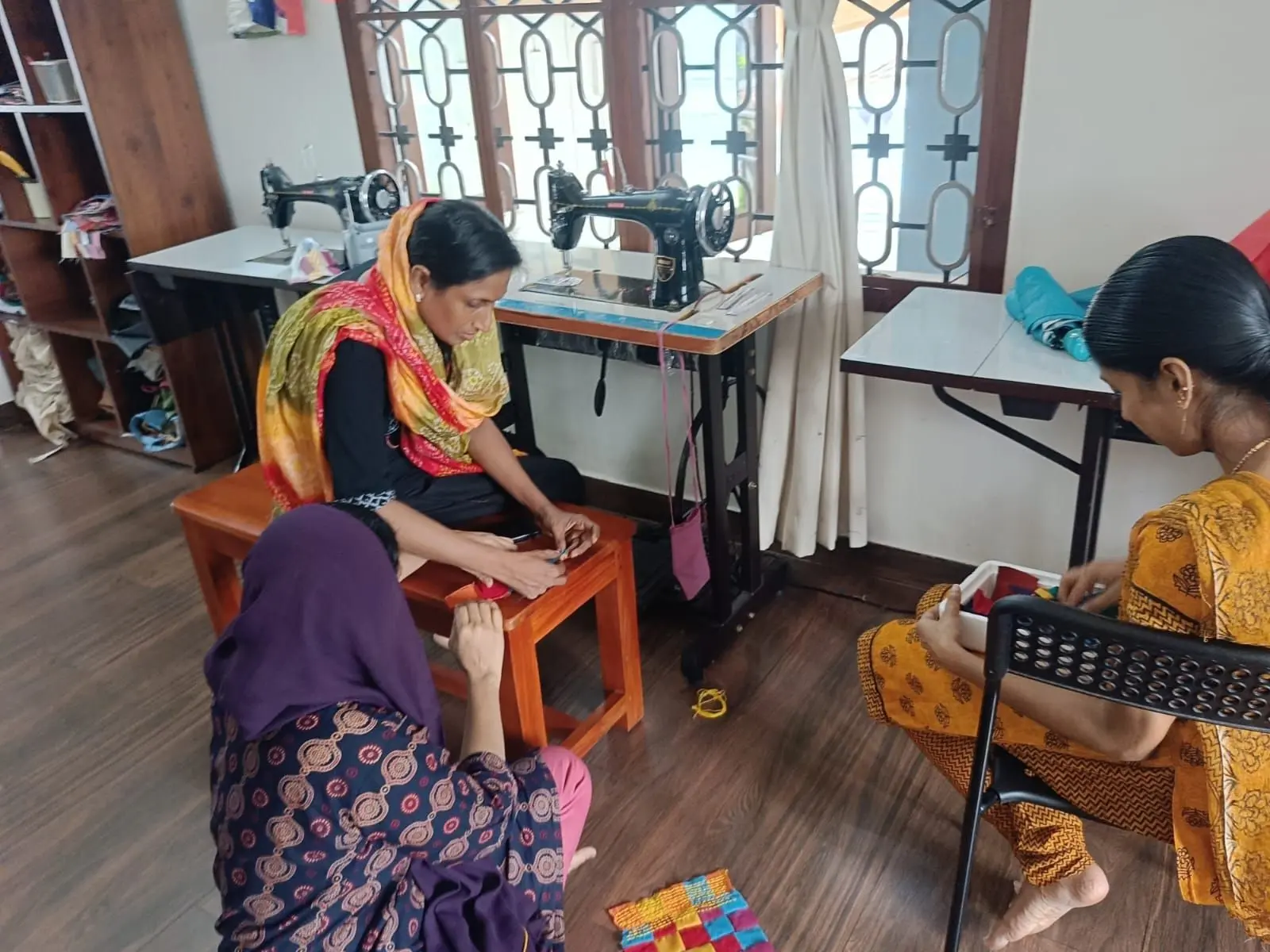
We continued our Kantha work by joining the fabric strips prepared in earlier sessions. The aim was to practise following a design, aligning fabric strips and keeping hand stitching even. Each participant used their design from the Kantha app, printed on A4 paper, to select and arrange the matching 6 cm-wide fabric strips. The printouts helped them check the colour order and placement before stitching the strips side by side into fabric panels. Participants then added rows of Kantha running stitches along the panels. We focused on consistent stitch lengths, even spaces between rows and thread tension, particularly at the thicker seams.
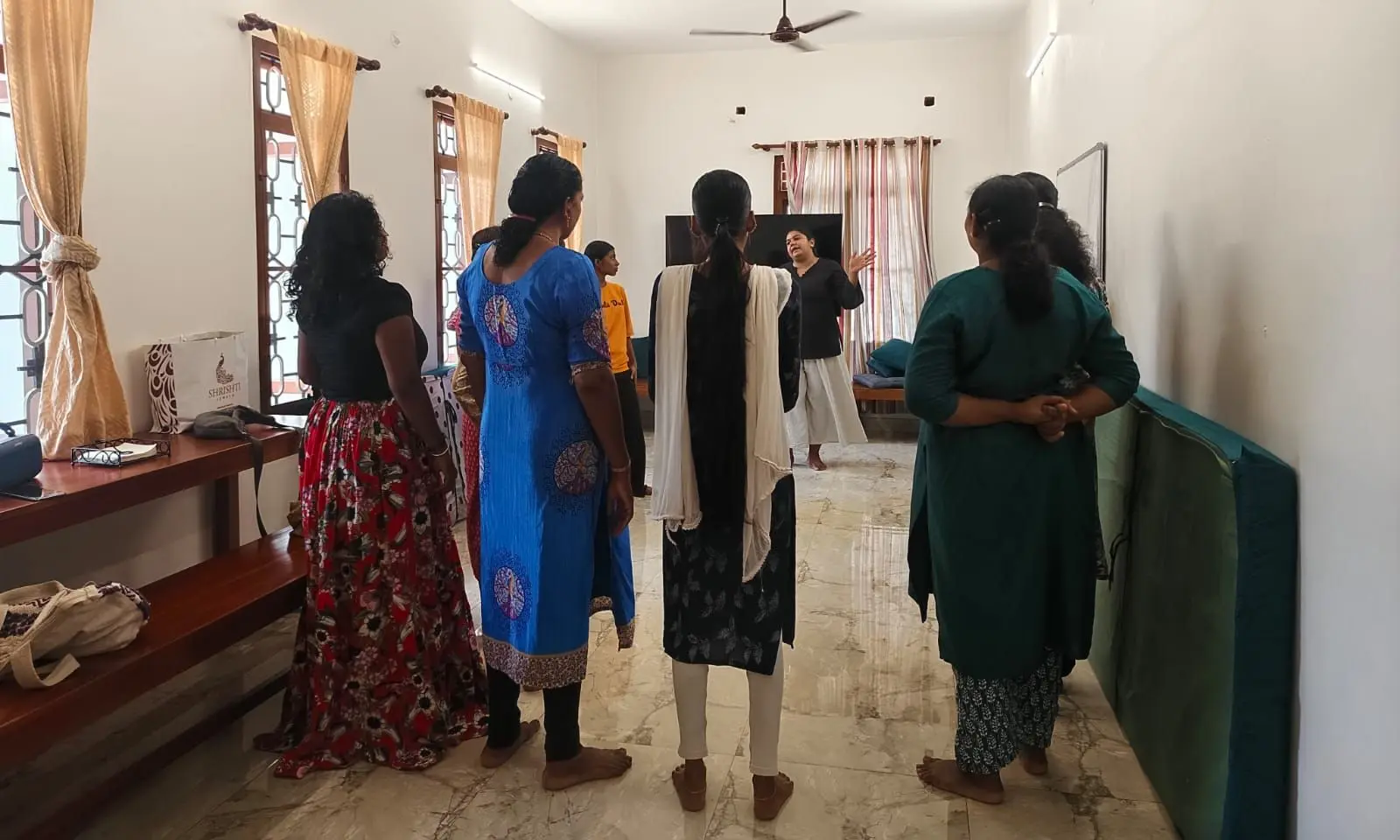
Exploring Self-Expression Through Movement, Music, and Art
The session began with a name-and-movement activity, where participants introduced themselves through simple movements. This helped create a comfortable and welcoming atmosphere, encouraging everyone to participate. The group then engaged in a mood-sharing activity, allowing participants to express how they were feeling at that moment. The next activity focused on movement exploration, providing participants with the freedom to explore different movements, connect with their bodies, and express themselves through movement. Participants then worked together to create music as a group. They explored sounds and rhythms, shared ideas, listened to one another, and presented their collective creation to the group. Following this, participants engaged in an individual art reflection, using art to express their thoughts, feelings, and experiences from the session. This offered them an opportunity for personal reflection and creative expression. The session concluded with a closing activity, bringing the shared experience to a meaningful end. Overall, participants responded positively and showed interest and engagement throughout the session. The combination of movement, music, and art offered different ways to communicate, explore feelings, express creativity, and connect with others in a supportive group environment.
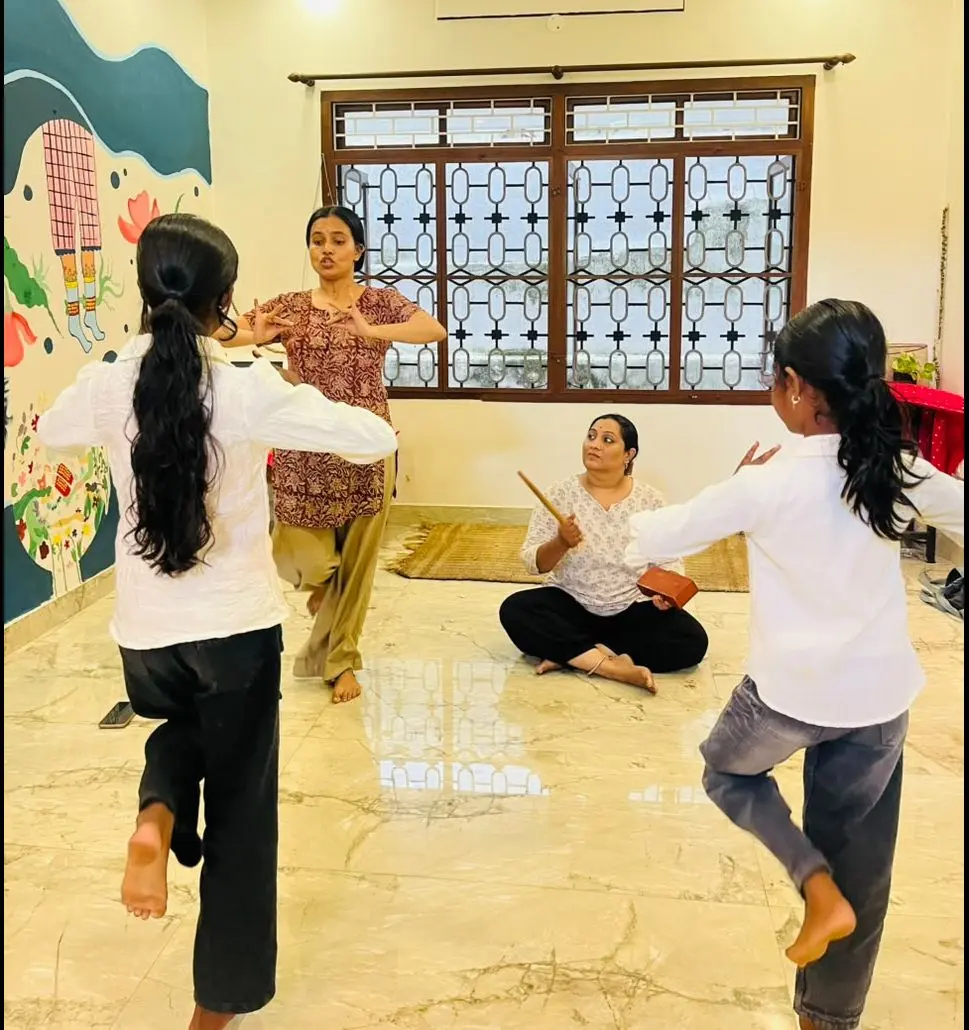
Experiencing Rhythm Beyond Sound
We began a new batch for Deaf and hard-of-hearing children. This initiative has been in preparation for the past few months, shaped by our years of experience as dancers and teachers in the field of Indian dance. We believe that Bharatanatyam and Mohiniyattam can offer meaningful opportunities for those children to explore rhythm, movement, coordination and expression when taught through accessible methods. Two teachers facilitated the session. While one of us demonstrated the steps, the other gently guided the child's hand to clap along with the rhythm. We were delighted to see how well she understood the rhythm, recognised the gaps between beats, and responded to changes in speed. Gradually, she began copying the movements and soon started performing the steps independently. By the end of the session, she had learnt five Nattadavu sequences, the basic movement units of Bharatanatyam. Throughout the session, we focused on visual demonstrations, clear movement cues, repetition, patience, individual attention and encouragement, allowing the child to learn at her own pace. This was our first session with the children. One child attended the class, and three more children have registered for the upcoming sessions. This beginning has strengthened our belief that, with appropriate teaching methods and support, classical dance can become an accessible and enriching space for Deaf and hard-of-hearing children to explore movement, rhythm and self-expression.
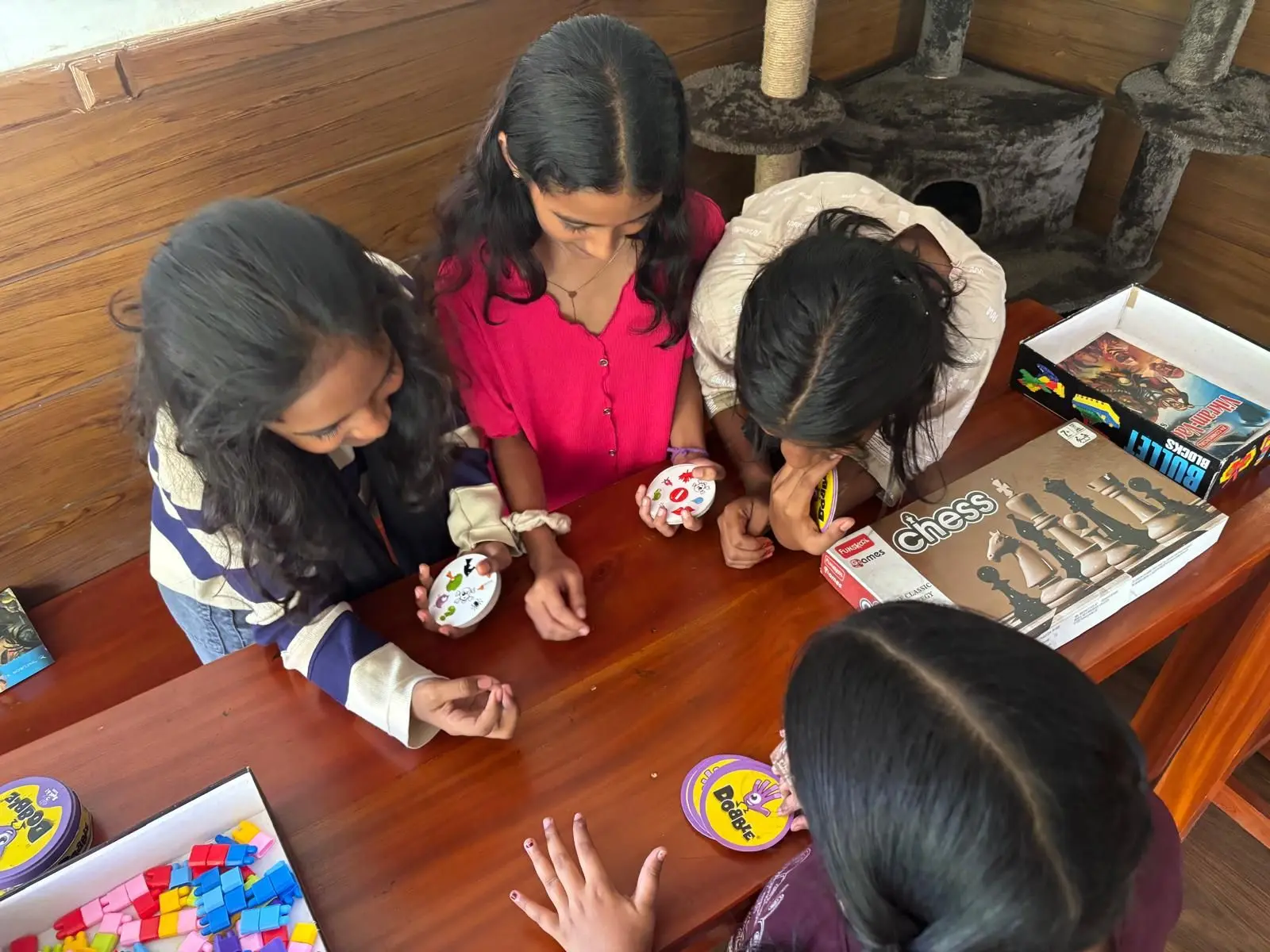
We begin our Curiosity Club with free play as children arrive. They choose games and building materials and play together, giving everyone time to arrive before we gather for the guided activity. We had asked children what they wanted to play and added games based on their suggestions. They were excited to see their choices and began setting them up themselves. With six games going on at once, children could choose what interested them. Two older children attending for the first time were initially unsure how to join in. Our facilitator invited them into an UNO game with others. As they played, they became more involved and helped explain the rules to younger children. The group later learned dominoes together too. Another group prepared Guess Who for next week, helping each other when the setup became frustrating. Jenga, LEGO and Dobble were also very popular.
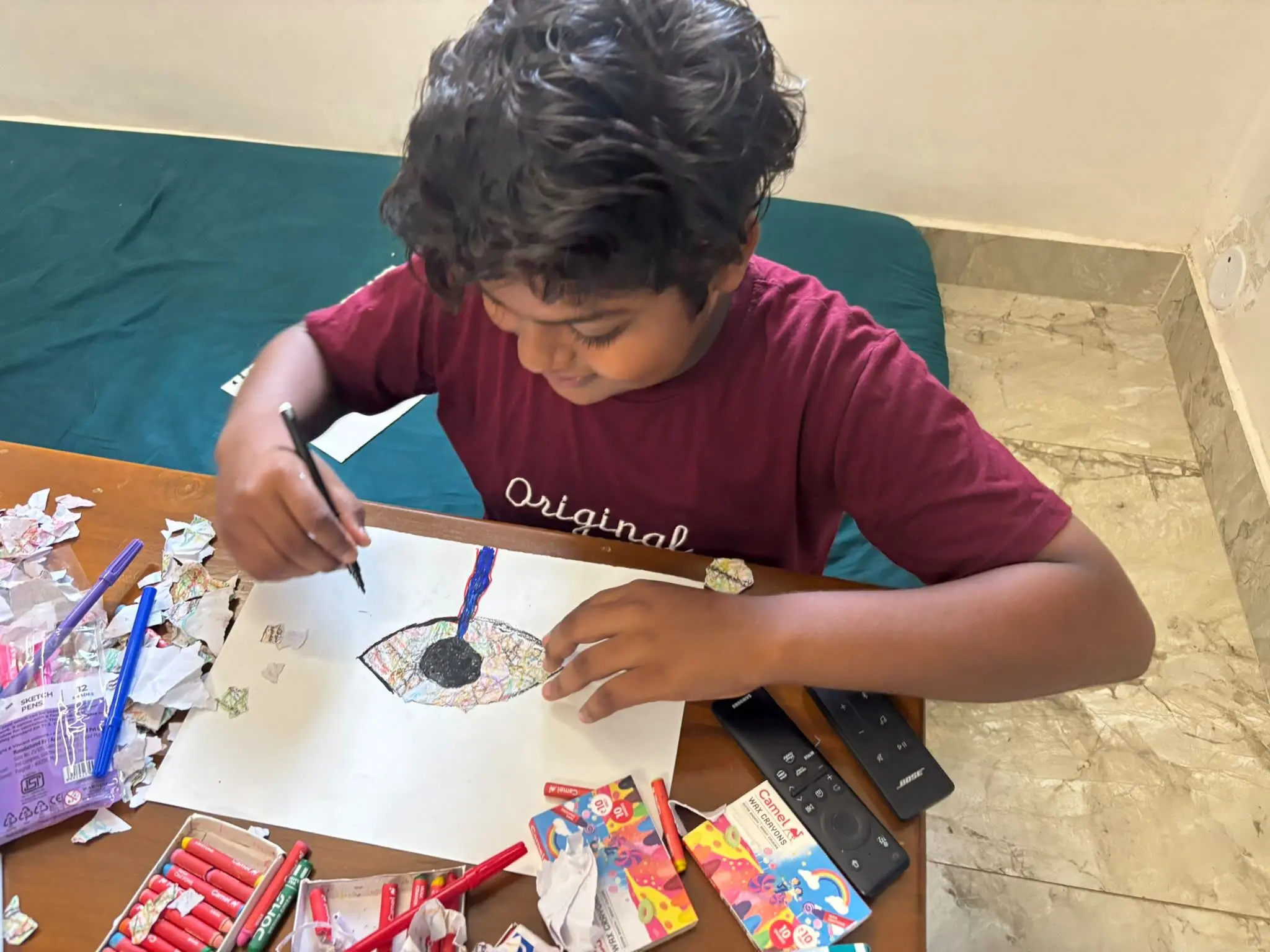
Our Saturday Curiosity Club fell on World Mental Health Day, making it a fitting time to explore caring for our thoughts and feelings. We prepared slides, art materials and our first Malayalam explainer video created using NotebookLM about the hand-brain model, explaining why big feelings can make thinking clearly difficult. After a rainstorm movement activity, children and facilitators shared their emotional “weather”. We discussed how feelings change and used think, pair and share to explore when and where big feelings arise. We talked about making a plan when something can be changed, and coping when it is outside our control: Breathe through bee breathing, Move through gentle movement and a body scan, and Create through art. For Create, children used crayons to scribble their stress or big feelings onto paper, pressing down and making marks freely. They tore the paper into smaller pieces, then arranged and glued them onto a fresh sheet to create a design of their choice. They added words to encourage themselves, such as “You are amazing”, “Never give up” and “I love you”. We were surprised by the messages they chose. On the back, they traced a hand and added people they could reach out to when they needed support. We closed with a recap of the model and ways to care for our mental health.
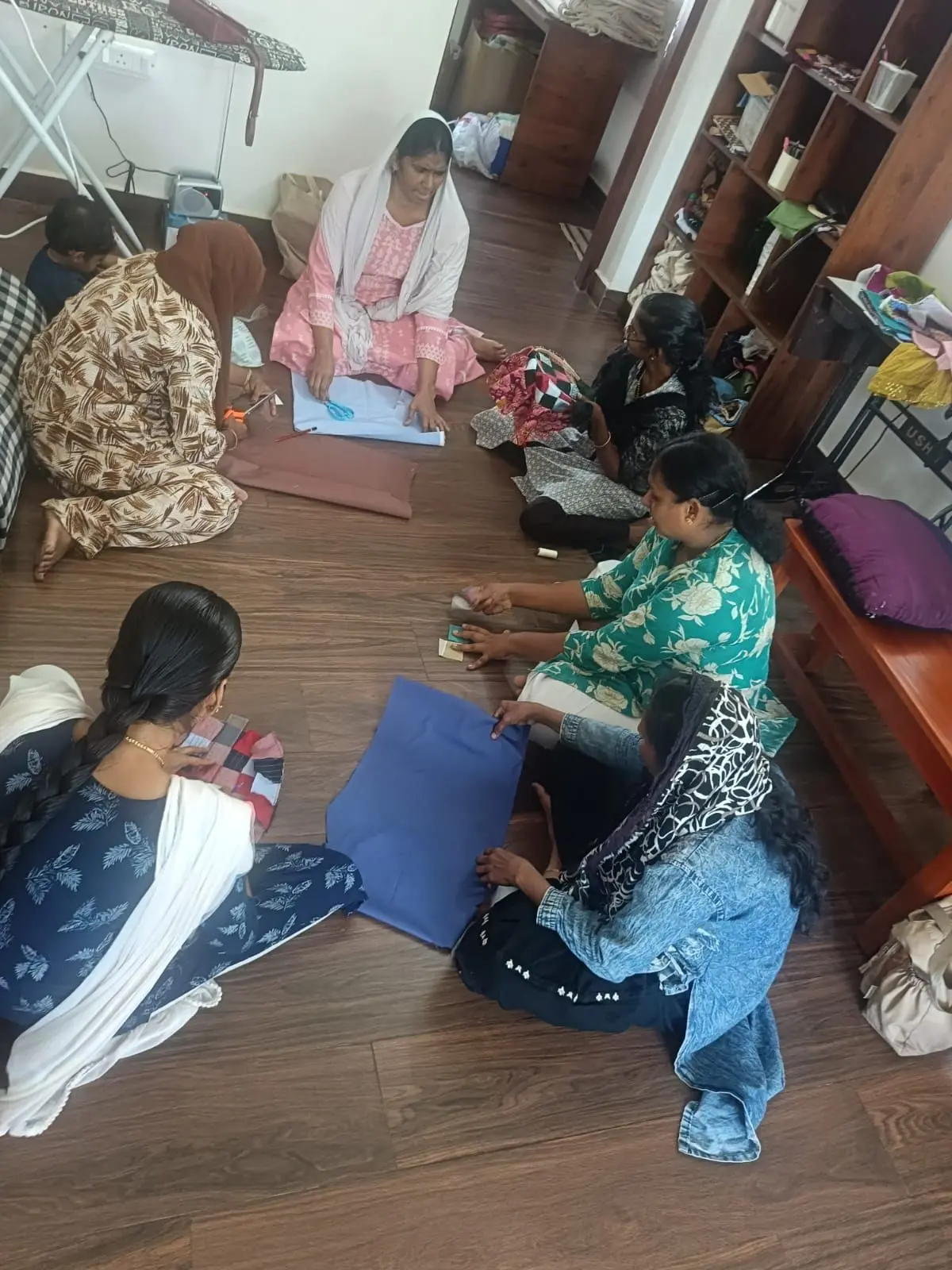
Digital Visual Planning and Kantha App Pattern Printing
To bring structured design layouts into our assembly process, we utilized the Kantha App to map out creative pattern variations. The app allowed us to test how different fabric strip widths and color sequences look when paired together, offering a clear digital preview before physical stitching. Once optimal pattern combinations were finalized, we printed these digital design sheets directly onto A4 paper. Each printed page acted as a detailed visual roadmap, guiding artisans on how to align, order, and position their pre-cut fabric strips for the upcoming panel assembly.
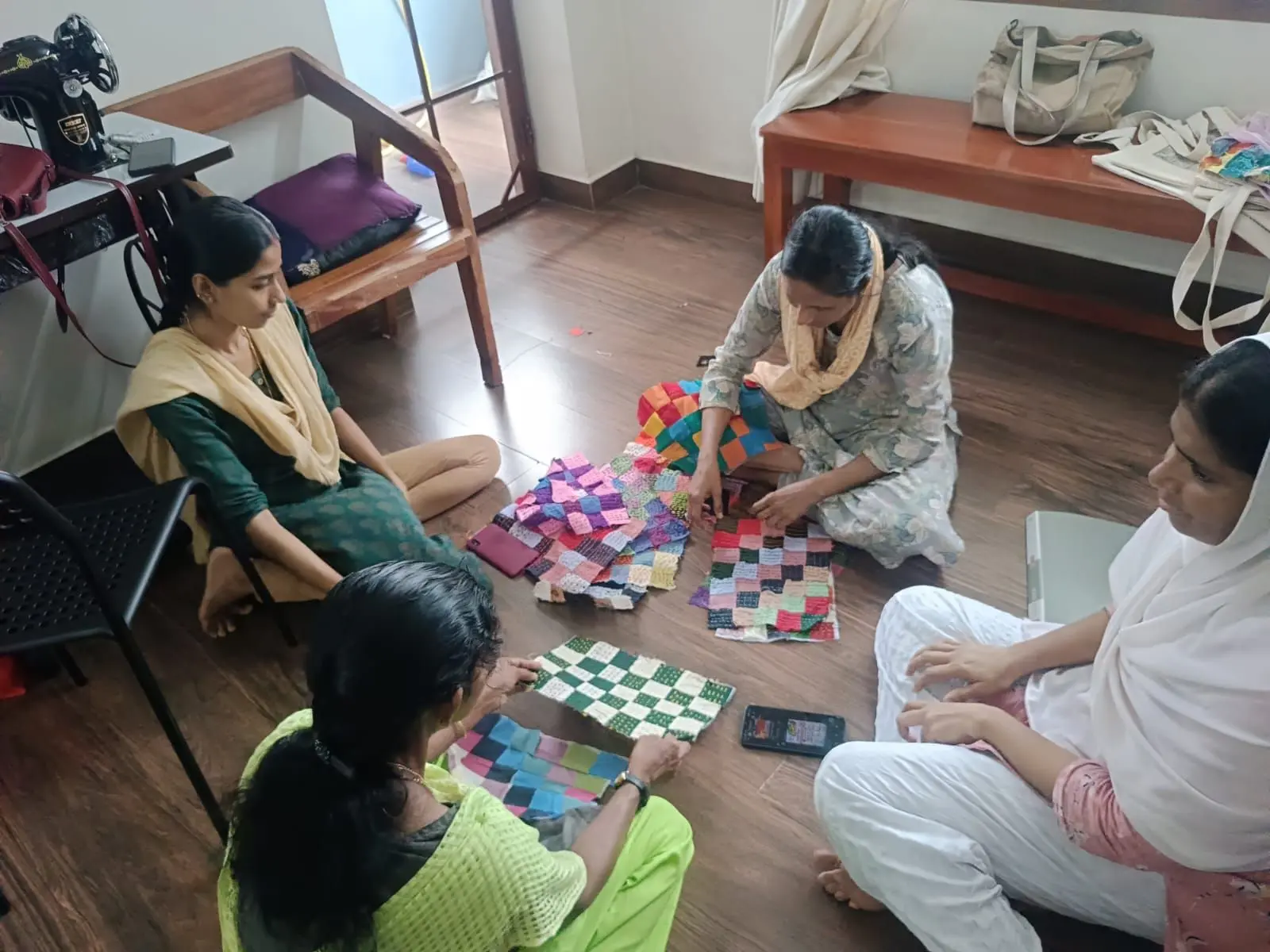
Systematic Preparation and Precision Cutting of Fabric Strips
We initiated a new production cycle focused on raw material processing and pre-stitching organization. The team gathered to sort through various multi-colored fabric scraps, categorizing them by texture, weight, and color tone to ensure balanced color distribution for upcoming Kantha panels. To maintain strict design uniformity, we accurately marked and cut the selected fabrics into uniform 6 cm wide strips. Every cut strip was inspected for edge neatness and proper length alignment before being bundled, labeled, and stored for the next phase of pattern assembly.
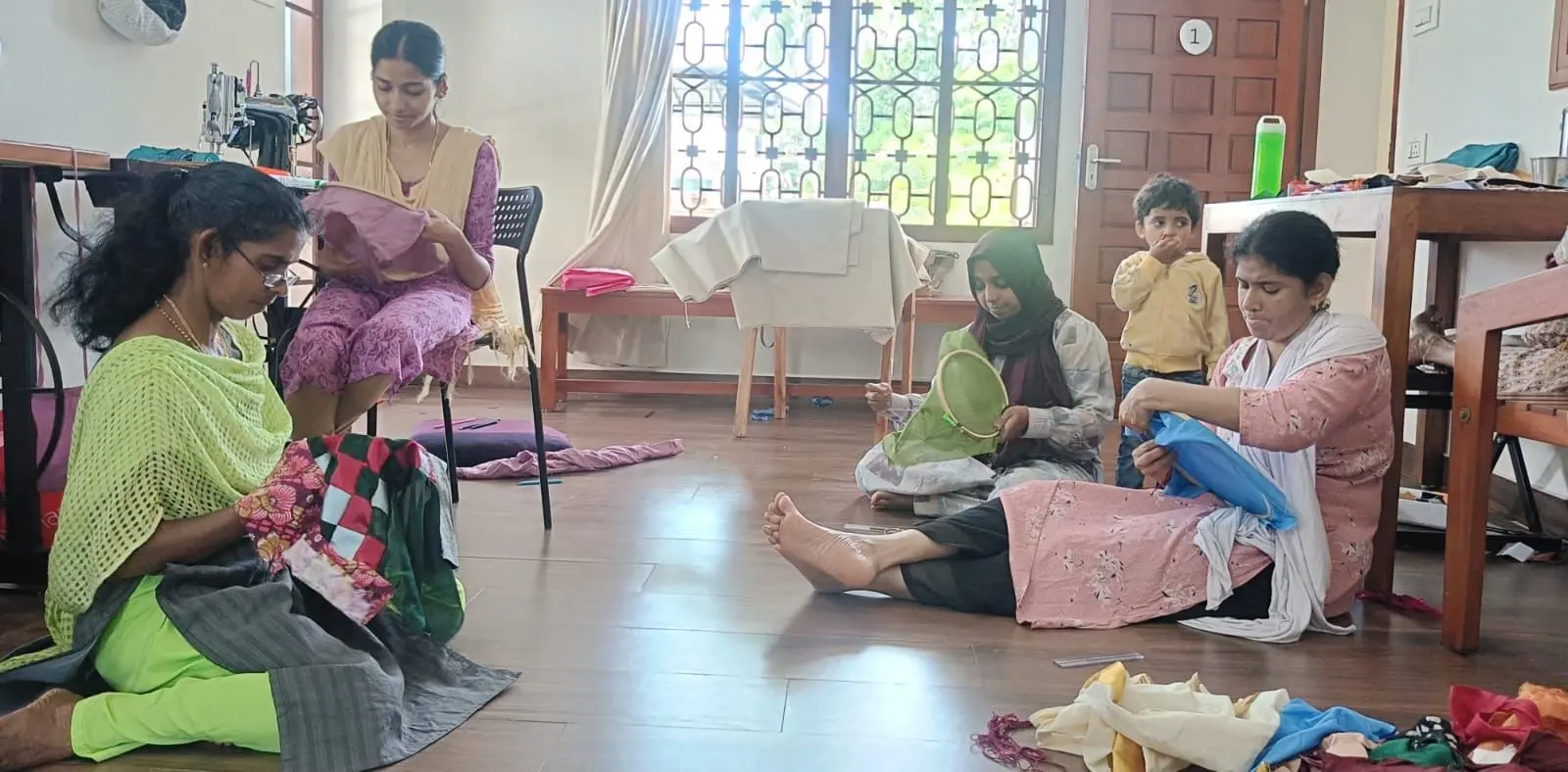
Building Stitch Precision: Guided Line Practice for Kantha Mastery
Today, the focus shifted toward building stitch accuracy and spacing consistency in Kantha hand embroidery. Transitioning away from small scrap pieces, the artisans began practicing on a single, larger fabric panel. To train their eye for even spacing, guided parallel lines were drawn across the surface, serving as visual markers for stitch length and gap distance. Working along these measured lines allowed the artisans to develop steady rhythm and control. The visual structure significantly improved stitch uniformity, yielding a cleaner, more cohesive texture across the panel. Trainers noted that with an additional three to four days of focused line-guided practice, the team will develop the muscle memory needed to execute flawless, evenly spaced Kantha stitching freehand without relying on drawn guides.
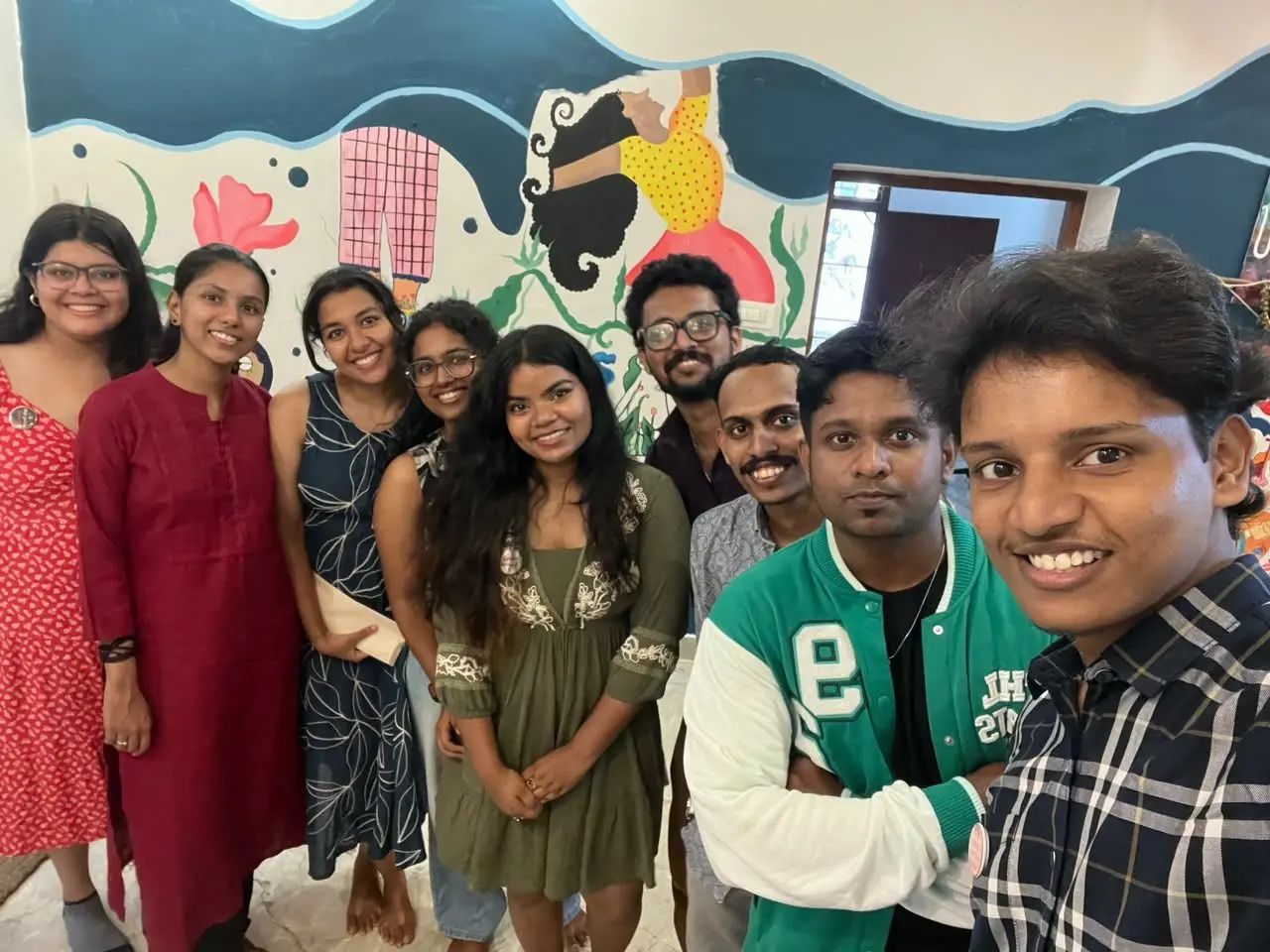
New MAD volunteers come together for an introductory session
Make A Difference (MAD) held an introductory session at aikyam Space for its new volunteers. The session introduced MAD’s vision, values and work with children, along with the volunteers’ roles and responsibilities. Games and group activities gave them time to get to know one another before beginning their work with the chapter.